

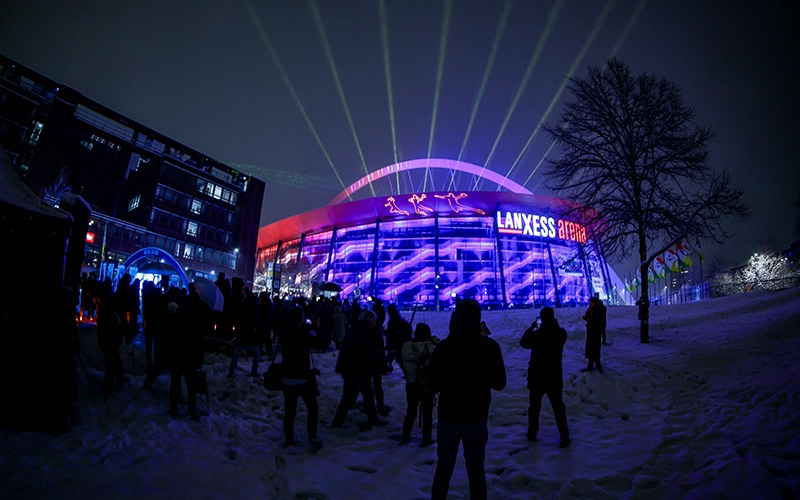
Fifty days from now, the best handball nations in the world will gather in Germany for the 30th edition of the IHF Men’s World Championship.
There is plenty to look forward to beyond the fight for the trophy. Germany has a long history with the competition, Cologne is once again preparing for a major handball occasion, and six cities will welcome teams and supporters from across the globe. With 50 days to go, we look at 50 stories, players, records and details that make Germany 2027 worth anticipating.
I. The hosts
1. Thirty editions of the Men’s World Championship
From the inaugural competition in 1938 to the 30th edition in 2027, it has been one hell of a journey. Germany hosted the first-ever edition of the competition and perfected the recipe time and time again to make every edition special.
2. Germany’s eighth time as host
Germany has hosted the Men’s World Championship seven times before 2027: 1938, 1958, 1961, 1974, 1982, 2007 and 2019. It will be the perfect setting for an anniversary edition, with state-of-the-art arenas, fiery spectators and great handball quality.
3. The record books belong to Germany
Germany has played more matches than any other nation in World Championship history and has recorded 131 victories, the same as Sweden. Only Spain has scored more goals across the competition’s history.
4. The night Germany conquered the world
Germany’s 2007 world title remains one of the defining moments in the history of the Men’s World Championship, as the hosts defeated Poland 29:24 in a memorable final in Cologne.
Photo credit: EHF / Kolektiff / Axel Heimken
5. Cologne: where the story began and where it will finish
Opened in 1998, the LANXESS Arena has become one of handball’s most iconic venues, hosting Germany’s memorable 2007 World Championship triumph and, since 2010, the EHF Champions League FINAL4, Europe’s premier club handball event.
Since 2023, the arena has also hosted the Lidl FINAL4, the showpiece event of the German DHB Cup, making Cologne a unique meeting point for the biggest occasions in international and domestic club handball.
6. Can Germany 2027 challenge the attendance record?
The 2019 edition, co-hosted by Germany and Denmark, attracted more than 900,000 spectators. Over 80% of available tickets for 2027 had already been sold and the numbers will soar.
7. Six cities, six different atmospheres
From Munich to Cologne, six host cities will bring their own sporting identity, handball traditions and local flavour to Germany 2027.
Each arena has its own history, from Kiel’s deep-rooted handball culture and Magdeburg’s passionate supporters to the international stage of Cologne’s
LANXESS Arena. Munich and Stuttgart also bring plenty of passion and perfect arenas for such a competition.
8. The club connection behind the host cities
Germany’s club handball culture will be an important part of the story at Germany 2027. Kiel is home to THW Kiel, Magdeburg to SC Magdeburg, Stuttgart to TVB Stuttgart and Hanover to TSV Hannover-Burgdorf – four Bundesliga clubs with strong local identities and passionate fan bases.
The tournament’s team allocations also create some interesting connections. Denmark and Sweden will play in Kiel, where THW Kiel has a long-standing association with Swedish handball and the Danish border is just a short journey away. Magdeburg will welcome Iceland, whose national team has strong links with SC Magdeburg through several of its key players, while France and Switzerland will play in Stuttgart, close to their home countries.
9. Where handball is alive
Explore what the tournament motto actually means. Go beyond the professional game and look at German grassroots handball, youth development, local clubs and the supporters who fill the arenas.
10. Germany 2027 is not the end of the story
Germany will also be involved in hosting the 2029 Men’s World Championship, alongside France.

II. The teams and the ambitions
11. Denmark are chasing history again
Four consecutive world titles have never been achieved before. Can Denmark become the first team to win five in a row? Their 2025 final victory over Croatia was another demonstration of their dominance.
12. The Danish dynasty after Mikkel Hansen and Niklas Landin
Hansen and Landin retired from the national team after the Paris 2024 Olympics. Denmark continued winning without them. They still won the 2025 IHF Men’s World Championship and the EHF EURO 2026. Can they continue their dominance?
13. Germany’s chance to end a 20-year wait
Germany’s last World Championship title came in 2007. Since then, they had the chance to fight for the medal only once, in 2019, when they lost the bronze-medal match. The Olympic silver medal in 2024 and the European Championship final in 2026 provide a compelling backdrop to their home tournament.
14. Croatia: from silver medallists to serious contenders
Croatia returned to the World Championship podium in 2025, finishing second. Can they build on that achievement and challenge for the title again? Their preliminary-round group includes Spain, Chile and Türkiye and they likely will face France in the main round. A win against either Spain or France is a must.
15. France begin a new chapter
Talant Dujshebaev’s appointment as France coach offers a plethora of storylines. He is only the second foreign coach France had in its history. Can he bring France to the top?
16. Portugal are no longer the surprise package
Fourth place in 2025 was Portugal’s best-ever World Championship result. Their fast-paced game and the emergence of the Costa brothers have changed the way opponents look at them. Can they now take the next step and seal a medal?
17. Egypt’s next step: from continental dominance to a global medal
Egypt have won four consecutive African championships and finished fifth at the 2025 World Championship. Their last three World Championship campaigns ended in quarter-final defeats. Can Xavi Pascual finally take them beyond that barrier?
18. Greece are back after more than two decades
Greece finished sixth in 2005, their only previous World Championship appearance. Their qualification for 2027 saw two wins against a more experienced opponent, the Netherlands. What can they do in a group with Sweden, Qatar and Norway?
19. A nation of 54,000 people takes on the handball world
The Faroe Islands will make their first appearance at the Men’s World Championship. Their recent progress includes a bronze medal at the 2025 Men’s Junior World Championship and 13th place at the EHF EURO 2026. Will they be able to go in the main round?
20. Türkiye’s historic debut – and a huge potential fan base
Türkiye will play in their first Men’s World Championship. Over 3.5 million people with Turkish roots live in Germany. This could be the start of handball becoming more and more popular in Türkiye.
21. Norway: A new era, with an old ambition
Norway reached back-to-back World Championship finals in 2017 and 2019, but have not returned to the podium since, finishing 10th in 2025. With Swedish coach Magnus Andersson taking charge in August 2026, Germany 2027 marks the beginning of a new chapter, as Norway look to blend the experience of their established stars with an emerging generation and return to the medal conversation.
22. Tunisia: a familiar name with renewed ambition
Germany 2027 will be Tunisia’s 17th consecutive World Championship. After winning silver at the 2026 African Championship, they will look to improve on their recent results. Oussama Boughanmi’s return will be key in propelling the African team higher.
23. Serbia’s new generation under Raul González
Serbia secured their place after a dramatic qualification tie against Hungary. With a new coaching project and several players competing at leading European clubs, can they regain the consistency that once made them a regular force at major championships?
24. Uruguay’s search for a first World Championship win on court
Uruguay have played 12 World Championship matches without winning one on the court. Their only victory in the historical record came through a 10:0 walkover against Cape Verde in 2021. Germany 2027 gives them another chance to change that statistic.
25. Five African teams, one global opportunity
Algeria, Angola, Cape Verde, Egypt and Tunisia will represent Africa. Instead of focusing exclusively on the established powerhouses, look at the different ambitions, playing styles and development paths of all five nations.
III. Eight groups, eight different stories
26. Group A: Germany get another chance against Serbia
Serbia defeated Germany 30:27 at the EHF EURO 2026. Their meeting in Munich is an opportunity for the hosts to respond, with Tunisia and Uruguay completing the group.
27. Group B: Egypt are approaching a milestone
Egypt have recorded 59 victories in World Championship history. A win in their opening match would be their 60th. Italy, Cape Verde and Saudi Arabia stand between them and that milestone.
28. Group C: Croatia and Spain lead a group with contrasting ambitions
The 2025 runners-up meet two-time world champions Spain, alongside Chile and debutants Türkiye. This could be an interesting mix of established contenders and teams looking to make a statement.
29. Group D: The South American derby returns
Argentina and Brazil meet again after facing each other in the final of the 2026 South and Central American Championship. France and Kuwait complete a group that offers a fascinating contrast in playing styles.
30. Group E: Scandinavia meets the rest of the world
Sweden and Norway bring a major Scandinavian rivalry to the same group, while Greece return to the World Championship and Qatar arrive with the legacy of their historic 2015 silver medal.
31. Group F: A debut with a serious challenge
The Faroe Islands face Portugal, Poland and Algeria. How will one of the smallest nations in the competition handle three opponents with considerable World Championship experience? Can Algeria progress from a group with three European challengers?
32. Group G: The champions against three very different challengers
Denmark face Slovenia, the United States and Angola. The focus will naturally be on the defending champions, but the other three sides have an opportunity to make the group interesting.
33. Group H: Iceland and the Magdeburg connection
Iceland will play in a city with a strong connection to their handball community through SC Magdeburg and its Icelandic players. North Macedonia, Bahrain and Japan complete the group.
34. The road to Cologne
The competition opens on 13 January, with the 32 participating teams divided into eight groups of four. Each team will play the other three sides in its group, with two points awarded for a win, one for a draw and none for a defeat.
The top three teams from each group will progress to the main round, meaning that 24 nations will remain in contention for the world title. The eight teams finishing fourth will move into the President’s Cup in Magdeburg, where they will compete for final positions 25 to 32.
The 24 qualified teams will be reorganised into four groups of six. Groups A and B will form Main Round Group I in Cologne, Groups C and D will make up Group II, also in Cologne, while Groups E and F will combine in Main Round Group III and Groups G and H in Group IV, both hosted in Hanover.
Importantly, teams will not start from zero. The points, goals scored and goals conceded from preliminary-round matches against opponents who also qualified for the main round will be carried forward. Each team will then face the three qualifiers from the other preliminary-round group, without playing the same preliminary-round opponents again.
After the main round, only the top two teams in each of the four groups will advance to the quarter-finals.
IV. The players and coaches who could define Germany 2027
35. Mathias Gidsel: can anyone stop him?
Gidsel was the MVP and top scorer at the 2025 World Championship, with 74 goals and 45 assists. Can he produce another tournament of that level and become the defining player of another Danish title campaign?
36. Francisco Costa: from young talent to one of Portugal’s leaders
At 19, Costa was named Best Young Player at the 2025 IHF Men’s World Championship after scoring 54 goals. Two years later, expectations will be even greater.
37. Dika Mem: the time to shine
One of the most spectacular right backs in world handball. His power, explosive acceleration and ability to score from difficult positions make him a natural headliner. He will also move to Füchse Berlin after the World Championship, adding a German Bundesliga connection to his story.
38. Simon Pytlick: the other half of Denmark’s attacking engine
Pytlick scored 50 goals at the 2025 World Championship, with a shooting efficiency of 75%, and was selected in the All-Star Team.
39. Emil Nielsen: the man between Denmark and their opponentsThe Danish goalkeeper was also part of the 2025 All-Star Team. He is absolutely fantastic at his best and a big reason why Denmark keep winning trophies.
40. Andreas Wolff and the importance of goalkeeping at home
Germany’s experienced goalkeeper could be one of the defining figures of the tournament for the hosts. He has been definining in the last decade for Germany and this is the moment he can add a World Championship medal to his tally.
41. Elias Ellefsen á Skipagøtu: the new kid on the block
The creative heart of the Faroese national team. Named IHF Young Male Player of the Year for 2023, he will experience his first Men’s World Championship in Germany.
42. Yahia Omar: Egypt’s big hope
The right back was Egypt’s leading scorer at the 2024 Olympic Games and the 2025 World Championship. One of the most dangerous backcourt players in international handball, he will be central to Egypt’s ambition to finally win a World Championship medal.
43. Domen Makuc: hero-in-waiting for Slovenia
A creative playmaker who brings speed and unpredictability to Slovenia’s attack. He scored 48 goals at the 2026 EHF EURO, finishing sixth in the tournament’s scoring chart.
44. Martim Costa: the creative force behind Portugal’s rise
The older Costa brother was named the All-Star centre back in 2025, scoring 44 goals. Alongside his brother, he ushered a new era with Portugal’s historic rise.
45. Ivan Martinovic: a new leader for Croatia
One of the leaders of the Croatian side following Domagoj Duvnjak’s international retirement. His combination of shooting power, leadership and experience makes him one of Croatia’s most important players
46. Xavi Pascual: a club legend facing a new international challenge
The Egyptian coach has won major trophies at club level, but Germany 2027 will be his first Men’s World Championship as a national-team head coach. How will he translate his club experience to the international game?
47. Gisli Kristjánsson: the Iceland mastermind
One of the most creative centre backs in world handball, Gísli Kristjánsson combines exceptional court vision, speed and an ability to unlock even the strongest defences. He will be one of the key figures as Iceland look to build on their fourth-place finish at the 2026 EHF EURO and challenge for a place among the world’s best in Germany.
48. Bryan Monte: Brazil’s stalwart
At just 23, Bryan Monte is one of the most exciting talents in Brazilian handball. Standing at 2.02m, the powerful left back combines physical presence with an outstanding shooting arm. After making his World Championship debut in 2023, he played an important role in Brazil’s historic run to the quarter-finals in 2025, scoring 25 goals. Germany 2027 offers another opportunity to establish himself among the leading backcourt players in international handball
V. The wider picture: global handball and the fans
49. Germany 2027 and the road to Los Angeles 2028
The World Championship forms part of the qualification pathway for the 2028 Olympic Games. The world champion will be the second team to secure their ticket, after hosts USA.
50. The fans are part of the story
No World Championship is complete without its fans. Germany will have their home crowd and the travelling supporters bringing their flags, songs and traditions from across the world, the stands will reflect the diversity and spirit of international handball. Germany 2027 wouldn’t be a true celebration without the support of the hundreds of thousands of fans selling out the arenas.